| Home | Job | Pinball | Photo Album | Automotive | Press/Awards | Contact |

NASA/GSFC Satellite Servicing Projects
Division
Page 3 of the RRM3 MissionPage 1 is here
Page 2 is here
On-Orbit Operations

View from the second stage after separation from the Trunk.
There is RRM3 on the left! You can still get a glimpse
of the second stage on the far right.
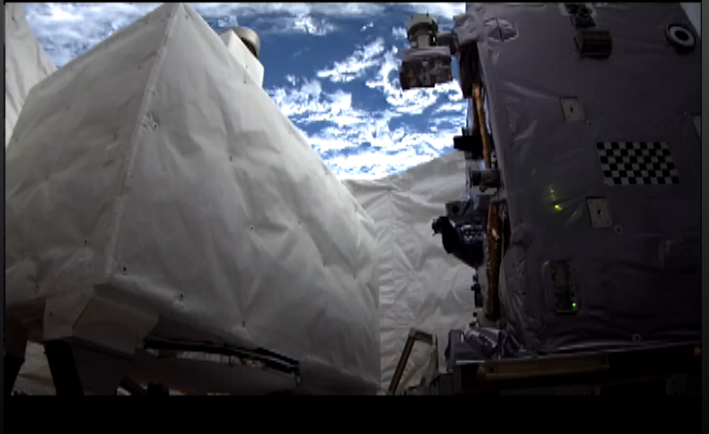
Photo of RRM3 (right) in space. GEDI is on the left.
The blue sky background is just so cool to see.
From the ISS video downlink (12/2018).
RRM3
stays powered up till launch by drawing power from the
Dragon vehicle.
This power is shut off for launch, and then resumed
just
after we
arrive on-orbit. This ensures our Methane charge stays
as
cold as
possible.
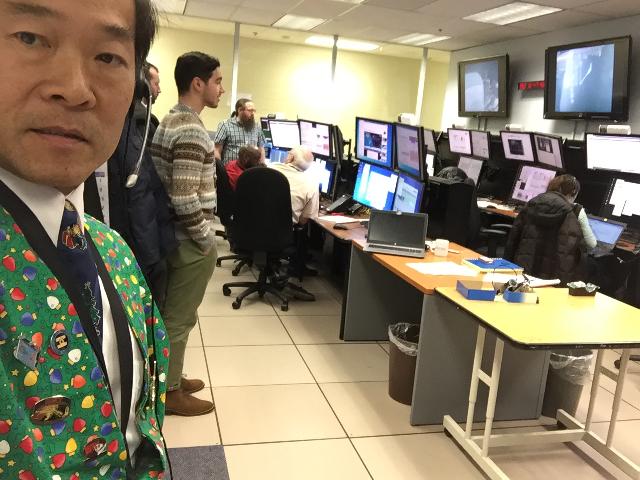
This is a view of half of our control center called the
Goddard Satellite Servicing Control Center (GSSCC).
It is also where we did Phase 1 and Phase 2 Operations.
I have my festive Christmas holiday vest on (December 2018).

Pedestal assembly inside the International Space Station by David Saint-Jacques and Anne McClain. This is the same assembly I am inspecting here.
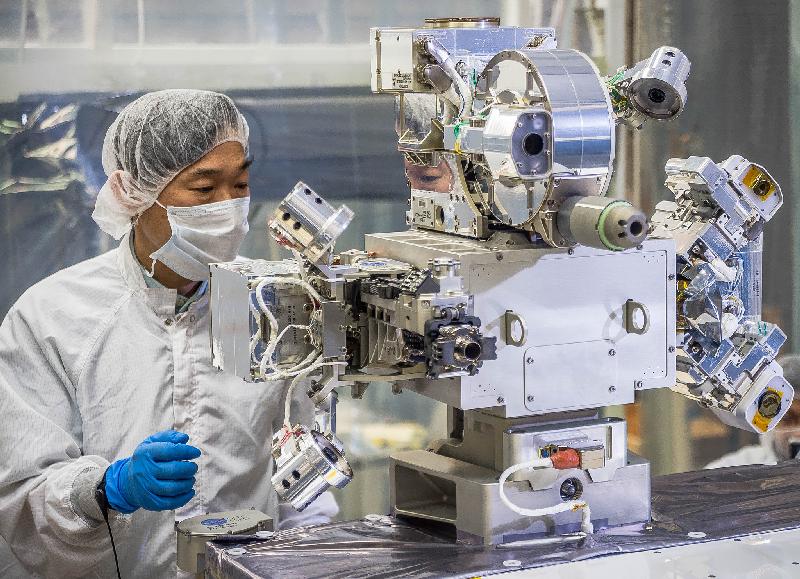
The
robotic tools, which sit on a pedestal on top of the main
RRM3 module
were launched inside the pressurized part of the Dragon
capsule.
Once they arrived at ISS, they were placed in storage
by the
astronaut crew. On 2/19/2019, these were taken out and
then
assembled into the Japanese module's air lock for transfer
outside into
the vacuum of space. That will occur at a future date.
In April 8 2019 (DOY 098), we experienced an unexpected power cycling during the ISS Main-Aux transition of the ELC Electronics. This was in support of the EVA to install a jumper in the ISS power system.
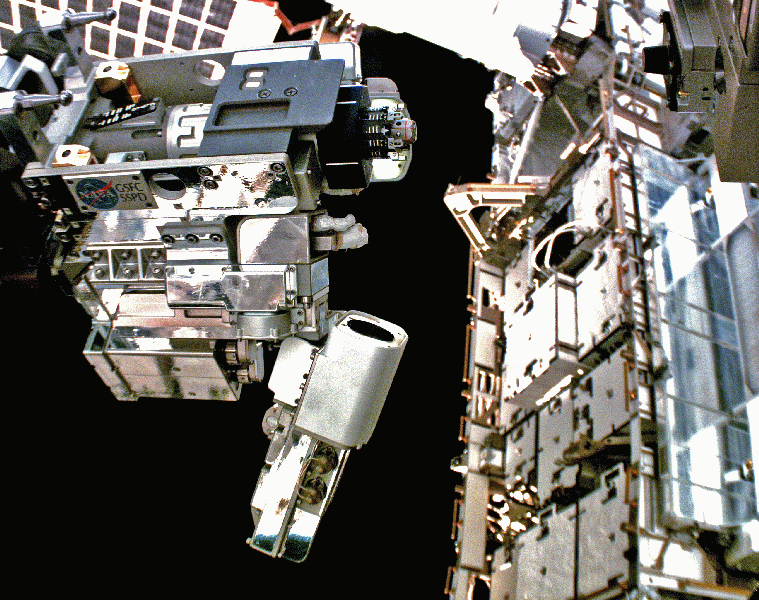
In August 2019, we performed on-orbit operations with SPDM/Dextre robot. Here you
see the Multi-Function Tool 2 on the left being used to perform robotic tests.
(image shared on social media)
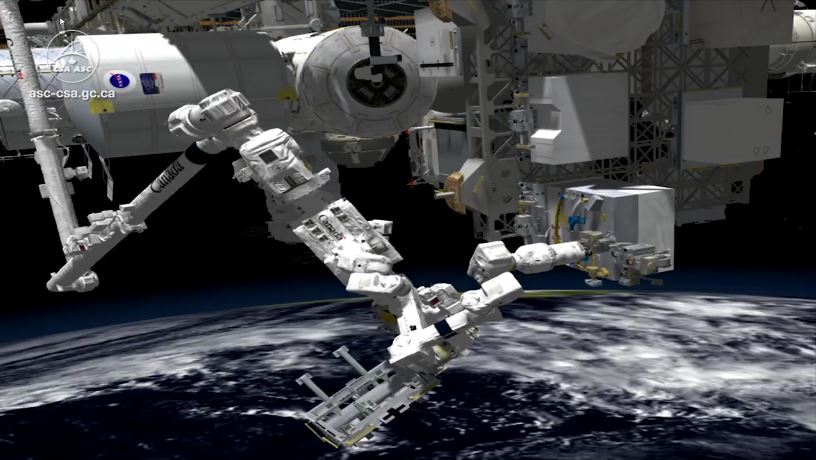
The Canadian Space Agency produced a video animation of our on-orbit ops and is
available here.
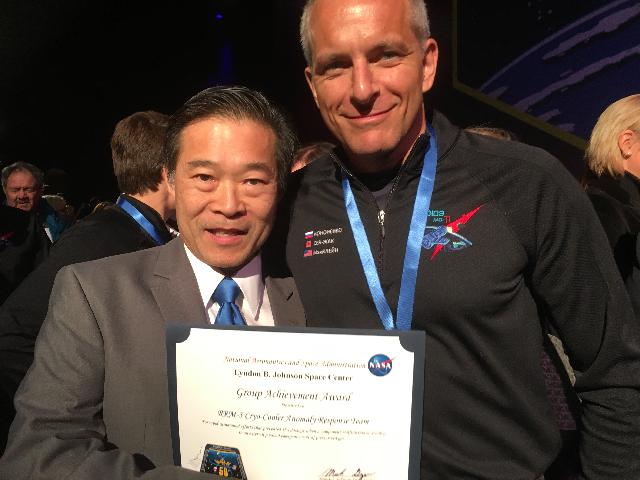
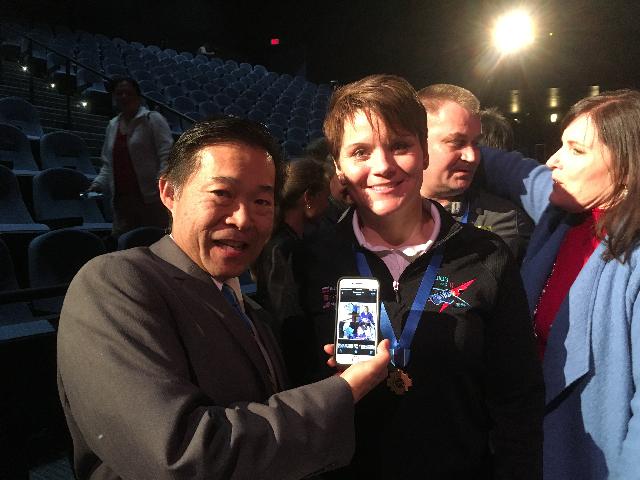
Taking a break from operations, I had the honor of receiving a Group Award from
the Space Station program for the successful handling of the Methane venting
during our power interruption. I received the award from the astronauts
that handled the tools David Saint-Jacques and Anne McClain.
The event took place on 12/10/2019.
Video of the ceremony.
We
performed our culminating series of on-orbit operations
during the week
of October 19, 2020. On Day 1 (10/19), we removed two
of the
tools from their holders and the SPDM held two tools
simultaneously for
the first time ever. Originally the SPDM was intended
to be used
with one of the two arms clamped down for stabilization.
The RRM
series of missions have advanced SPDM operations greatly
over the years.
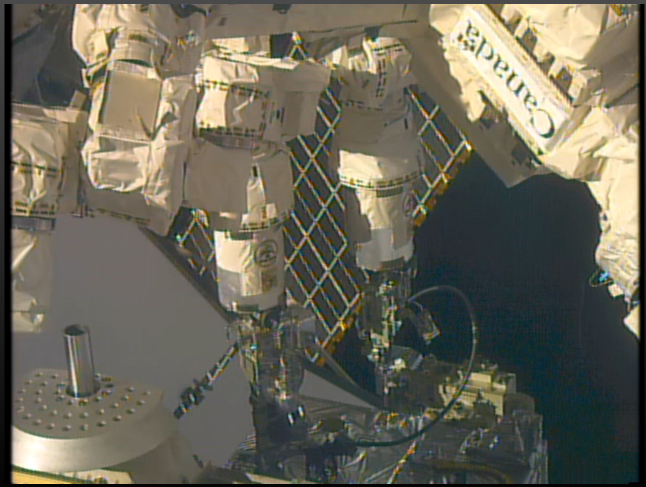
SPDM holding two robotics tools at the same time.
On
Day 2 (10/20), we attempted to thread the refueling hose
into the RRM3
Fuel Transfer Module as well as the VIPIR2 inspection
tendril.
However, we ran out of time despite the long 12 hour
shift, and
the day ended without success.
Upon review, the NASA management team decided to grant us one additional long day of operations, and we started Day 3 on 10/22/20 at 4 am local. This time we were successful and were able to both thread the refueling hose into the proper location and confirm the same with the VIPIR2 camera.
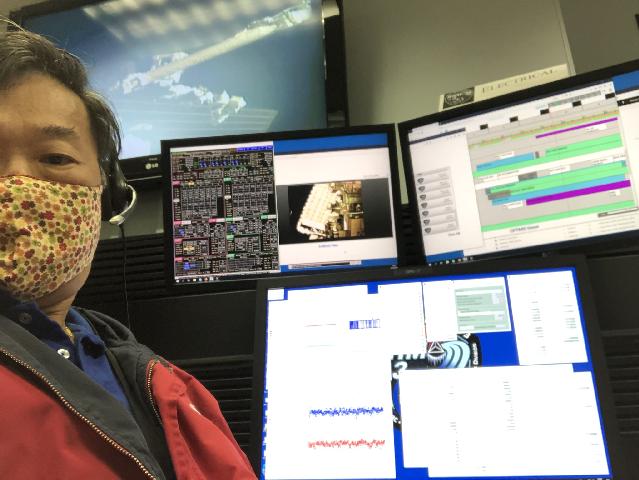
At the GSSCC for our on-orbit operations. You can see the "Electrical"
sign at the top for my console position.
Our
operations concluded the next day on 10/23 when we stowed
the tools
back into their holders. Links specific to this round
of
operations are below.
NASA.gov feature
Video of one of the operations on Facebook

In December 2020 our team received an award from the Goddard
Space Flight Center. As of this writing available only on internal
NASA site.
RRM3's mission ended in October 2023 when it was removed from its spot and placed on the "roof rack" of the NG-19 resupply ship. It then burned up when the ship re-entered the atmosphere in December 2023.
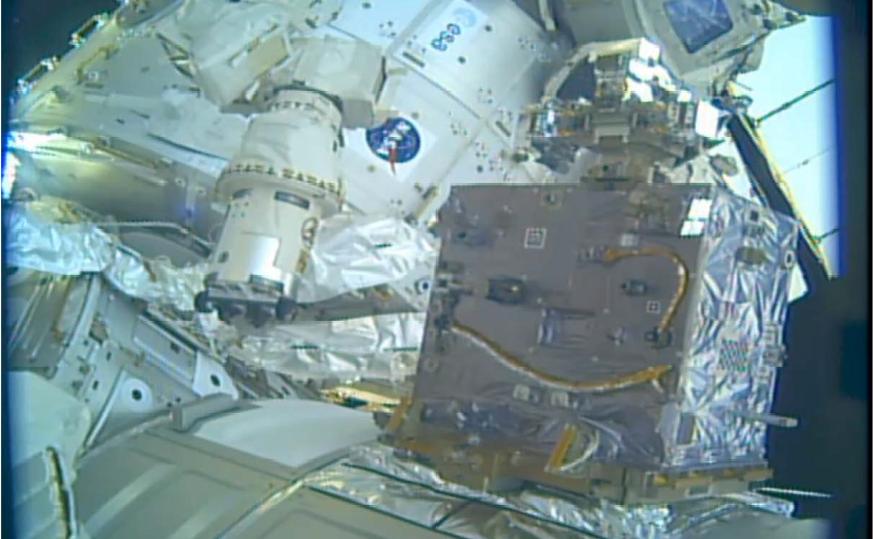
Image of the removal of RRM3 in October 2023. It is mounted on the
NG-19 craft that will take it back from orbit.
RRM3 still proved to be a valuable test bed even till the end. Some wear of the grey GBK blanketing was noticed and we took images to document how 5+ years of exposure in space affects this commonly used insulation material. Although its mission was cut short, its lessons learned will be used in the OSAM-1 mission where we fly up to an orbiting spacecraft and perform servicing operations on it.

Custom RRM3 pinball machine from Jill and her kids
In November 2024, we had our final group gathering and Jill McGuire (program manager) gave out awards to particular people and (as she did before) she and her family made a special pinball machine for me. It was highly appreciated!

The additional adornments were designed and 3D printed by her kids.
Upon review, the NASA management team decided to grant us one additional long day of operations, and we started Day 3 on 10/22/20 at 4 am local. This time we were successful and were able to both thread the refueling hose into the proper location and confirm the same with the VIPIR2 camera.
At the GSSCC for our on-orbit operations. You can see the "Electrical"
sign at the top for my console position.
NASA.gov feature
Video of one of the operations on Facebook
In December 2020 our team received an award from the Goddard

Space Flight Center. As of this writing available only on internal
NASA site.
RRM3's mission ended in October 2023 when it was removed from its spot and placed on the "roof rack" of the NG-19 resupply ship. It then burned up when the ship re-entered the atmosphere in December 2023.
Image of the removal of RRM3 in October 2023. It is mounted on the
NG-19 craft that will take it back from orbit.
RRM3 still proved to be a valuable test bed even till the end. Some wear of the grey GBK blanketing was noticed and we took images to document how 5+ years of exposure in space affects this commonly used insulation material. Although its mission was cut short, its lessons learned will be used in the OSAM-1 mission where we fly up to an orbiting spacecraft and perform servicing operations on it.
Custom RRM3 pinball machine from Jill and her kids
In November 2024, we had our final group gathering and Jill McGuire (program manager) gave out awards to particular people and (as she did before) she and her family made a special pinball machine for me. It was highly appreciated!
The additional adornments were designed and 3D printed by her kids.
Links
- Wikipedia page on CRS-16. As of March 2018, it still showed that the International Docking Adapter would be the main payload, but that has been changed to RRM3 and JEDI. The IDA is an important addition to the ISS as it allows commercial crew vehicles to dock with Station. The fact that they rescheduled it to accomodate us is a big confidence booster for us.
- SSPD Home Page. RRM3 Specific page is here.
- Facebook photo album on this adventure.
- Story about RRM3 completing testing at GSFC and KSC on nasa.gov.
- Discussion on nasaspaceflight.com forum.
- Article on phys.og.
- Launch delay for December 4 due to moldy mouse food.
- 3D models of the old launch pads.
- Story on spaceflightnow.com with my picture.
- Facebook Page on this adventure.
- Imagery
Online (IO). JSC image depository
behind NASA fire wall.